
On this page
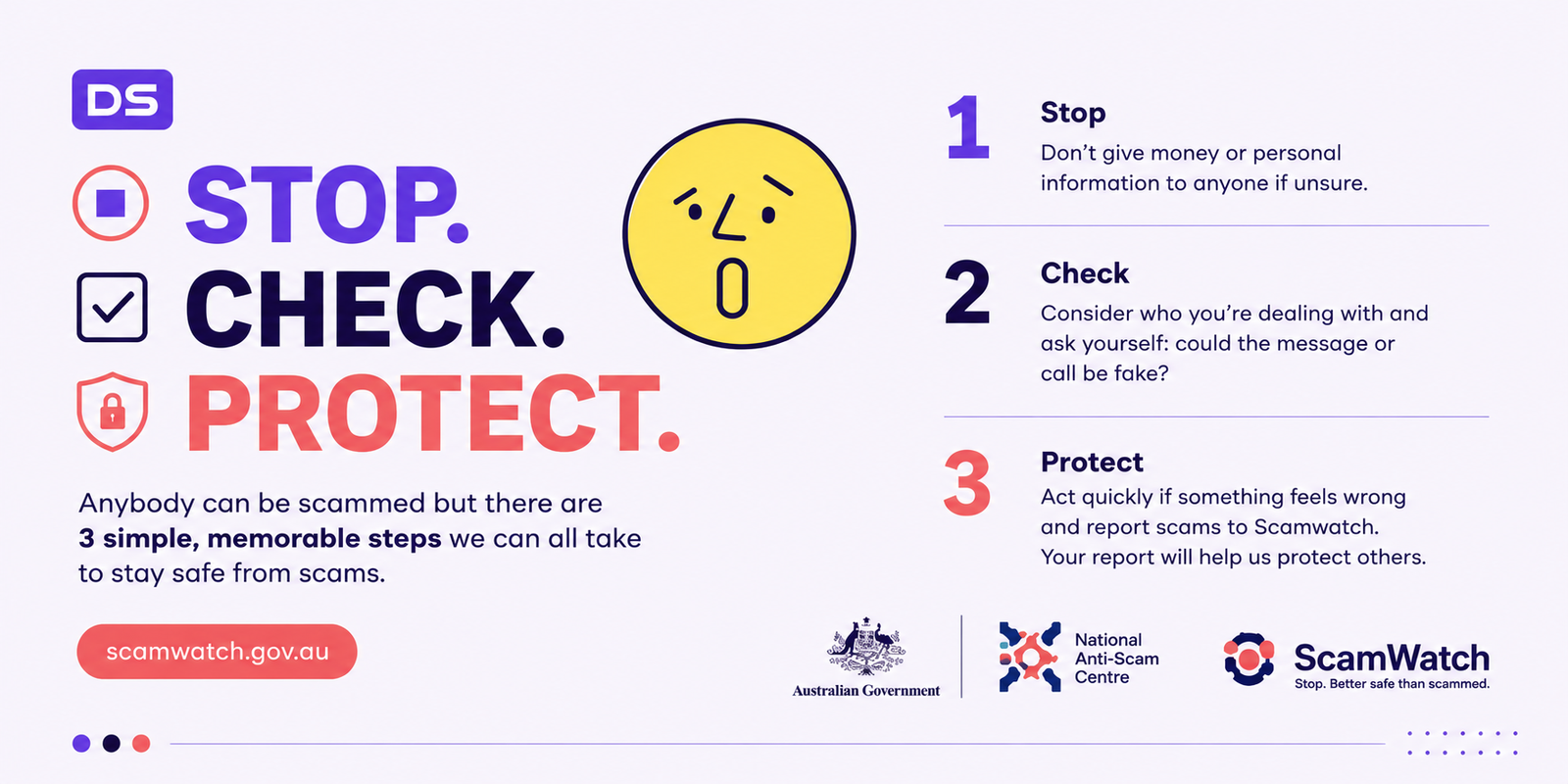
As part of Scams Awareness Week, we're encouraging Australians to remember three simple steps when something doesn't feel right: Stop. Check. Protect.
Scams are becoming increasingly sophisticated. From convincing websites and fake investment platforms to impersonation, phishing and social media scams, it can be difficult to tell what's genuine.
Scammers don't always rely on obvious tricks. They can spend time building trust, create a sense of urgency or impersonate legitimate businesses and individuals to convince you to send money, cryptocurrency or personal information.
Stop. Check. Protect.
Taking a few extra minutes before acting can make a significant difference.
Stop
Stop and think before sending money, cryptocurrency or personal information. Scammers often try to create urgency or pressure you into acting before you've had time to think.
If someone is rushing you to make a payment, transfer crypto, provide personal information or take action on your account, slow things down.
Check
Check who you're really dealing with.
Don't rely solely on the phone number, email address, website or link someone has provided. Find the organisation's official contact details independently and contact them directly if you're unsure.
Even if a message appears to come from someone you recognise, verify unusual requests before acting.
Protect
If you believe you've encountered a scam, stop communicating with the person and don't send any further money or crypto. Report the activity to the relevant platform or financial institution, and secure any accounts or personal information that may have been compromised.
You can learn more about Stop. Check. Protect. on the Scamwatch website.
Common scams involving cryptocurrency
Cryptocurrency can appear in many different types of scams. Understanding some of the most common approaches can make them easier to recognise.
Fake investment opportunities
Investment scams may advertise opportunities through social media, online advertising, messaging apps or unsolicited phone calls.
Scammers can create professional-looking websites and trading platforms that appear legitimate. Some may even display fake investment returns or allow an initial withdrawal to build trust before encouraging you to deposit larger amounts.
Be particularly cautious of anyone promising guaranteed returns, unusually high profits or claiming there is little or no risk.
Impersonation scams
A scammer may pretend to represent a cryptocurrency exchange, bank, government agency or another trusted organisation.
They might tell you there is a security problem with your account and ask you to transfer funds, provide account information or share a verification code.
If someone contacts you unexpectedly claiming to represent Digital Surge and you're unsure whether the communication is genuine, contact us independently through our support page. You can reach us by live chat in the app or on our website, or by email at contact@digitalsurge.com.au.
Digital Surge does not publish a phone number. If someone calls you claiming to be from Digital Surge, it is not us.
Phishing emails, messages and websites
Phishing attempts are designed to steal passwords, personal information or other account credentials.
A message might claim there's an issue with your account and direct you to a website that looks almost identical to the real one.
Avoid signing into your account through unexpected links. Check website addresses carefully and, where possible, navigate directly to the official website or app yourself.
Remote access scams
Be cautious if someone unexpectedly asks you to install software that allows them to access your computer or phone remotely.
Scammers may impersonate technical support, banks, telecommunications companies or other organisations and claim they need access to fix a problem.
Giving someone remote access can allow them to view personal information, access accounts or potentially make transactions from your device.
Romance and relationship scams
Some scammers spend weeks or months building relationships online before introducing an investment opportunity or asking for money.
A common warning sign is someone you've met online encouraging you to invest through a particular platform, buy cryptocurrency or transfer crypto to an address they provide.
Never allow trust in an online relationship to replace independent verification.
Recovery scams
People who have already lost money to a scam can be targeted again.
Someone may claim they can recover stolen money or cryptocurrency in exchange for an upfront payment, tax, fee or additional deposit.
Be extremely cautious of unsolicited offers to recover lost funds.
Warning signs to look out for
While scams take many different forms, there are some common warning signs:
- Promises of guaranteed or unusually high investment returns
- Pressure to act immediately or keep an opportunity secret
- Unexpected requests to buy or transfer cryptocurrency
- Requests for passwords, login details or two-factor authentication codes
- Requests to install remote-access software
- Being told to send crypto to an address provided by someone else
- Unexpected contact from someone claiming there's a problem with your account
- Investment platforms that make it difficult to withdraw your money
- Requests for additional payments to release or recover existing funds
- Celebrity endorsements or social media advertisements that can't be independently verified
One warning sign doesn't automatically mean something is a scam, but it's a good reason to stop and investigate before proceeding.
Scamwatch also provides more information on how scammers operate and the methods they use.
Protecting your Digital Surge account
There are also some simple steps you can take to improve the security of your Digital Surge account.
Keep two-factor authentication active
Two-factor authentication is mandatory on every Digital Surge account. It protects you even if someone obtains your password. Sign-in and withdrawal codes come from your authenticator app, not from a text message, so treat any message offering to text you a code with suspicion.
Never share your security codes
Never provide your password or two-factor authentication codes to another person.
Use a strong, unique password
Avoid using the same password across multiple websites or services. If another service experiences a data breach, reused credentials could put other accounts at risk.
Save your withdrawal addresses
If you withdraw crypto regularly, saving your own addresses in the Address Book makes it harder to be talked into sending funds somewhere unfamiliar. Withdrawing to a new address requires email confirmation as well as your two-factor authentication code.
Check before you click
Be cautious of unexpected emails, text messages and social media messages containing links. When in doubt, navigate directly to Digital Surge rather than using a link you've been sent.
Question unexpected requests
If someone claiming to represent Digital Surge asks you to take an unusual action, contact us independently before proceeding.
What should you do if you think you've been scammed?
If you believe you've encountered a scam, acting quickly can help limit further losses.
- Stop communicating with the scammer and don't send any additional money or cryptocurrency.
- Secure your accounts and change any passwords or security details that may have been compromised.
- Contact your bank or cryptocurrency platform as soon as possible if you've sent funds or shared financial information.
- Contact Digital Surge if the situation involves your Digital Surge account or a transaction through our platform.
- Report the scam to Scamwatch to help authorities identify scam activity, understand emerging trends and warn others.
If you've lost money to cybercrime, a Scamwatch report is not an official police report. Scamwatch also provides information on the appropriate steps to take if further reporting or assistance is required.
Further reading
- How to avoid crypto scams in Australia
- Spotting crypto scams: what to watch out for
- What to do if you've been scammed in our help centre
Take your time
Scammers often rely on urgency, emotion and trust to encourage people to act before they've had an opportunity to properly assess what's happening.
If something doesn't seem right, stop before taking action.
Take your time. Check the details independently. Speak to someone you trust.
And remember: Stop. Check. Protect.
For more information and resources, visit Scamwatch.